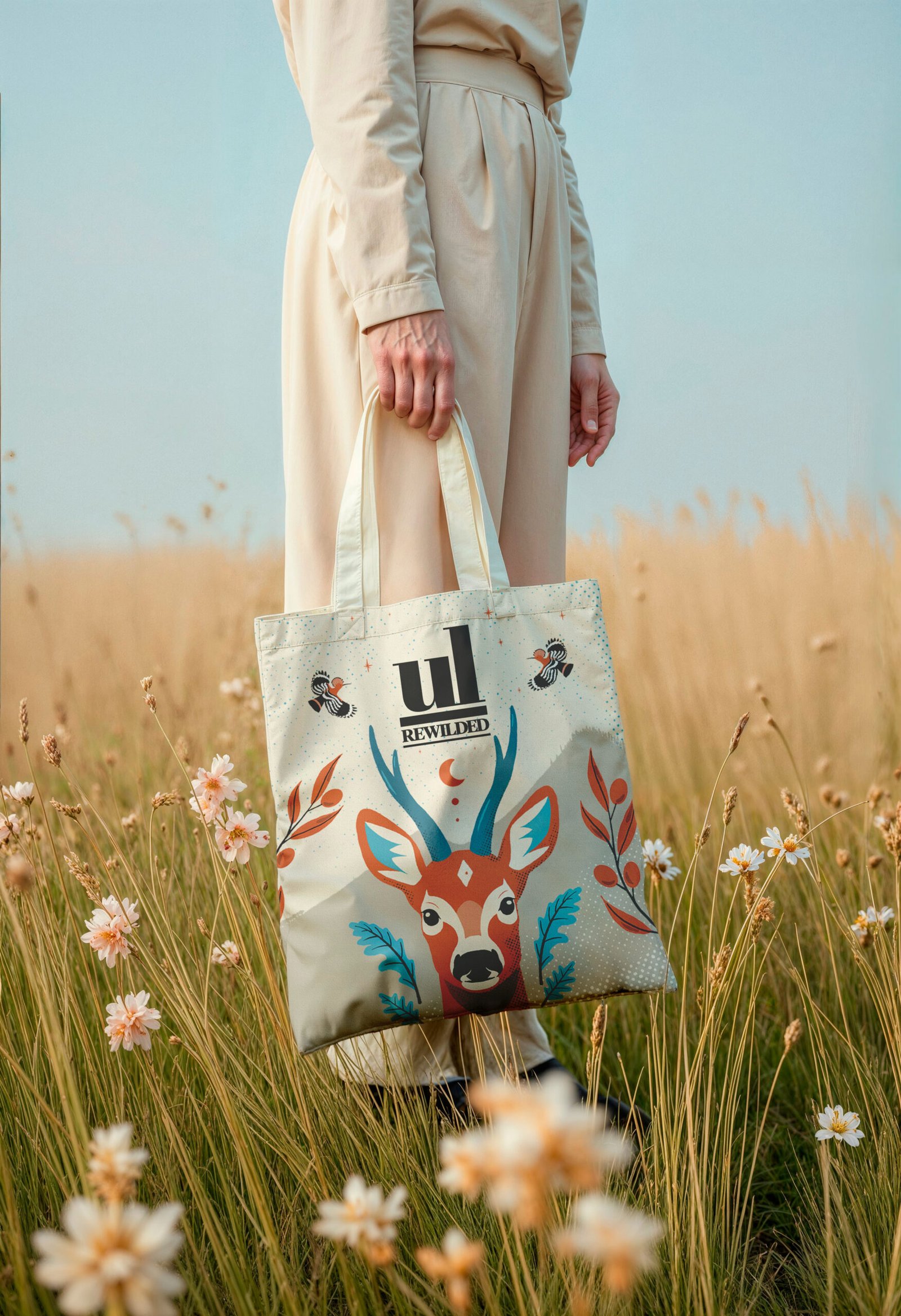
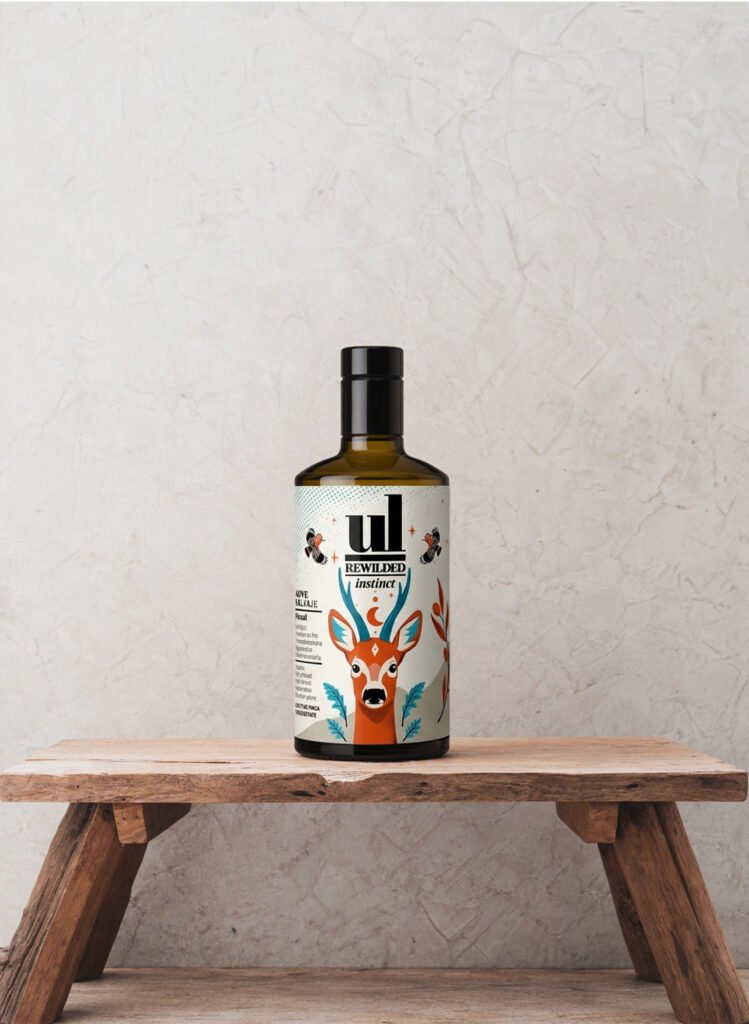
Organic Regenerative Picual · Extra Virgin Olive Oil · 500 ml
Harvest 26/27 · Acidity 0.1%-0.2%
VERY HIGH BIOPHENOLS CONTENT >400 MG/KG
An extra virgin olive oil with character, strength, and personality. This Organic Picual EVOO is a true powerhouse of natural antioxidants and biophenols, offering an intense and fruity flavor that elevates any dish into a superior gastronomic experience. Cultivated using organic practices that respect nature's rhythms and protect the richness of our environment.
Tasting profile: Green almond and freshly cut grass on the nose, artichoke and green tomato on the palate, a clean bitterness, and a long peppery finish.
Food pairings: Use it raw, where you can taste it: over tomatoes, on bread, through a soup at the last moment, or by the spoonful in the morning.
EARLY HARVEST
MOUNTAIN GROVE
SINGLE ESTATE
AWARDS:
2024/2025 · Top 10 Healthiest Olive Oil in the World — AOVE Premium Salud international competition.
2024 · Most Sustainable Olive Grove in Spain.
INSTINCT: In the hottest hours, the roe deer seeks shade beneath the olive trees and doesn’t move again until the sun begins to drop. It isn’t laziness: it’s instinct, the same instinct that knows when to take shelter and when to step out, with no one to teach it. The ancients saw in the roe deer a symbol of quiet wisdom — the kind that isn’t reasoned, but inherited.
Our Picual follows that same instinct: guided by wisdom and a deep respect for tradition. It is a smooth, complex, soulful oil, meant to be savored slowly. It is the quiet mystery of the grove at dusk. It is the untamed beauty of the grove in daylight.
Follow your instinct. Connect with your nature.
Verdial & Cornezuelo organic regenerative · extra virgin olive oil · 500 ml
HARVEST 26/27 · ACIDITY 0.14%
VERY HIGH BIOPHENOLS CONTENT >400 MG/KG
An EVOO that balances the Verdial and Cornezuelo varieties, with great smoothness and wild flavors. An oil that awakens the senses. From regenerative agriculture that nurtures soil health, captures carbon, and protects the biodiversity of our environment. Milling on the estate in less than 2 hours from harvest in a Passivhaus oil mill.
Tasting profile: Intense green fruitiness with aromas of olive leaf, fresh almond, thyme, rosemary, and wildflowers. Harmonic and enveloping on the palate with a sweet entry, complemented by subtle, elegant bitterness and peppery notes.
Food pairings: Perfect for raw consumption over toast, salmorejo, salads, and carpaccios. Sublimely enhances white fish, roasted vegetables, sheep’s milk cheeses, and finishing touches on chocolate or citrus desserts.
EARLY HARVEST
DEHESA GROVE
SINGLE ESTATE
AWARDS:
2022 · Bronze Medal at the ZHAW (Zürcher Olivenöl Evaluierung), Zurich: Recognition of organoleptic quality and environmental commitment.
Olivares Vivos Certificate (SEO/BirdLife)
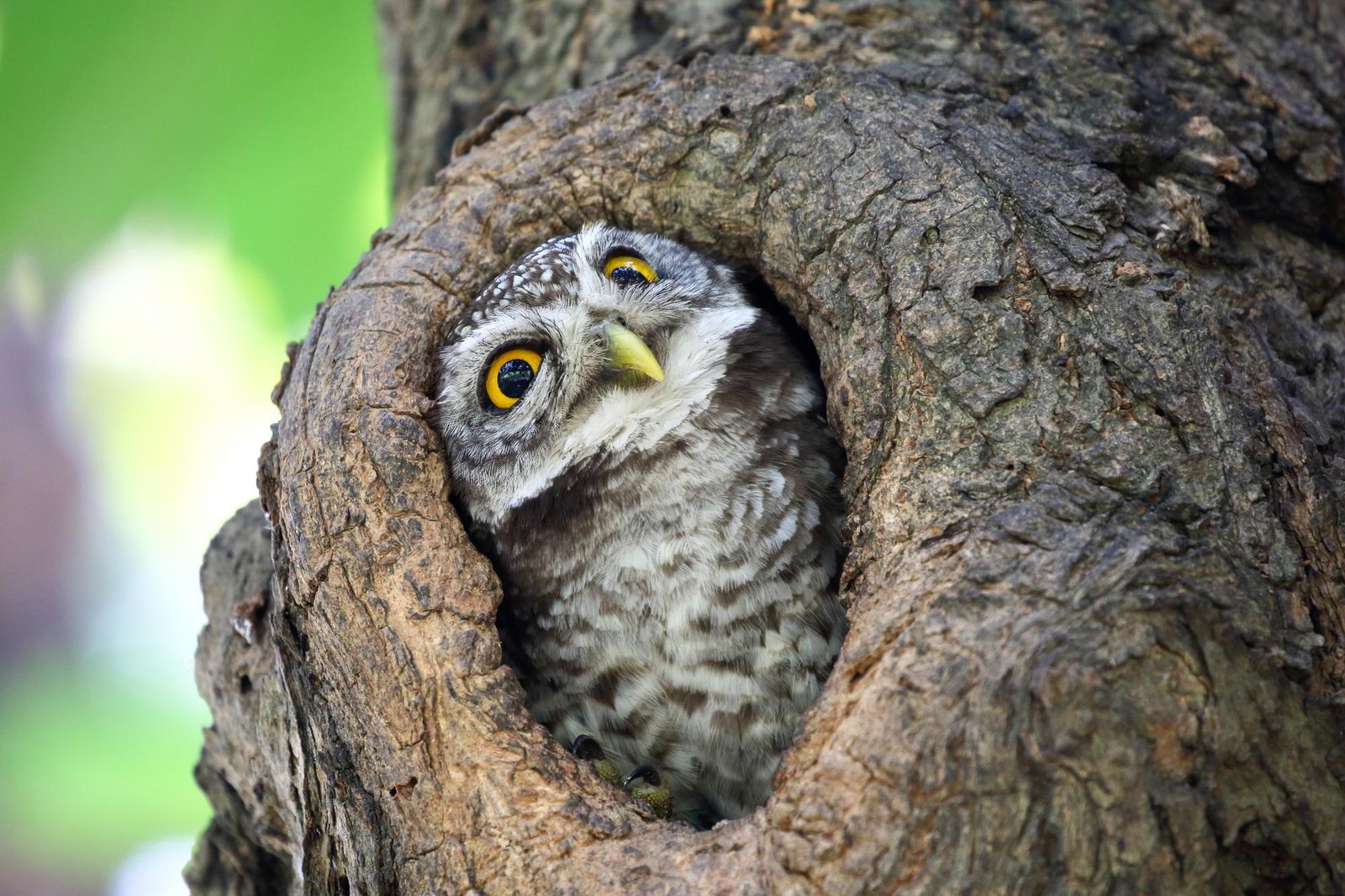
SENSE: When the light fades from the olive groves, the little owl wakes. It doesn’t watch from afar: it lives in the cracks of the trunk, sees what the night hides, and has kept these trees company since before anyone counted them. The Greeks placed it beside Athena, goddess of wisdom, because a bird that sees in the dark knows something the rest of us don’t yet know.
This blend of Verdial and Cornezuelo is born of that same synchrony: the owl with the night, the grove with its cycles, the picker with the one moment the olive gives everything it has — no sooner, no later. Olives from a traditional grove, harvested with the patience of someone who knows the land by heart. The result is a smooth, complex oil that isn’t explained, it’s felt — the taste of a wild grove.
Trust your senses. Know your roots.
- Project Drawdown, ed. Paul Hawken
A plant growing in bare, sprayed soil has nothing to defend itself against—no little stressors to activate its survival arsenal. That translates into a bland, simple taste and low nutrient density.
But when it grows among wild grasses, odd-looking bugs, and free-pooping mammals, it gets activated in every possible way. It responds by producing more polyphenols—like oleocanthal, which gives olive oil its distinct sting in the throat, peppery finish, and potent anti-inflammatory action; and oleuropein, responsible for the sharp, grassy, or green-almond bitterness felt directly on the tongue, celebrated for its cardiovascular and metabolic benefits.
Flavour and nourishment aren’t two separate things, they come from the same place: a land that is alive.
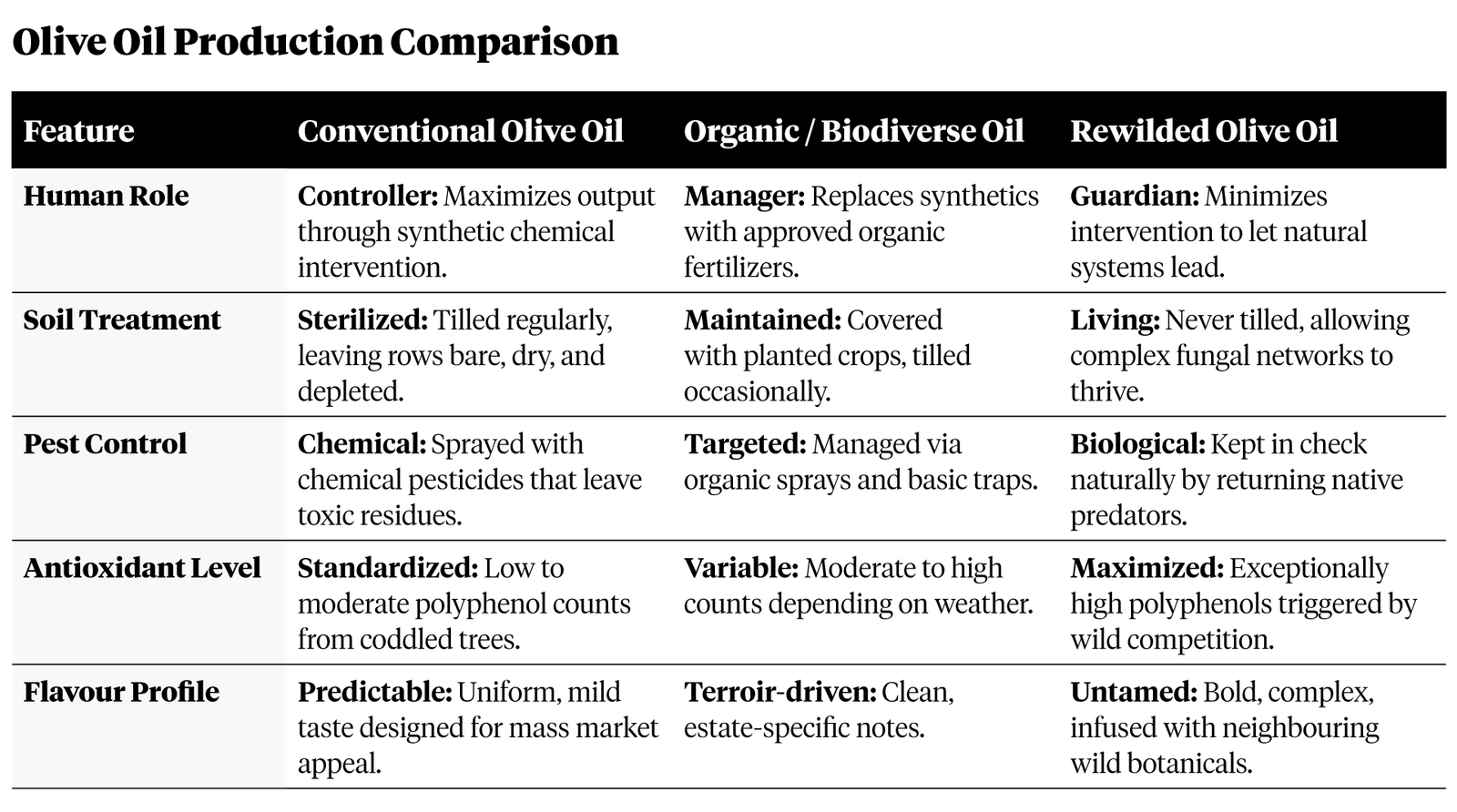
| Property | Conventional | Organic | Rewilded |
|---|---|---|---|
| Soil | Tilled or sprayed bare | Often still tilled | Never tilled — structure and fungal networks left intact |
| Ground cover | Removed | Sometimes tolerated | Native grasses, herbs and wildflowers left to grow |
| Pest control | Synthetic pesticides | Approved organic treatments | Birds, bats and predatory insects, returned to the grove |
| Fertility | Synthetic fertiliser | Organic inputs, often imported | Wild fauna, leaf litter and living roots cycling nutrients in place |
| Biodiversity | Close to zero | Improved | The point of the whole exercise |
| What the label tells you | Nothing about the land | That nothing was sprayed | That the ecosystem is working |
| Effect on the oil | Standardised, mild, with legal traces of pesticides and herbicides | Cleaner, still mild, no traces of pesticides and herbicides | Higher polyphenols, stronger bite, complex flavour that changes every harvest |
Comparison between conventional, organic and rewilded Agriculture
Rewilding traditional olive groves fundamentally repairs broken ecosystems. Industrial olive production creates ecological deserts through monoculture farming. Rewilding removes human control to allow native flora and faunato return.
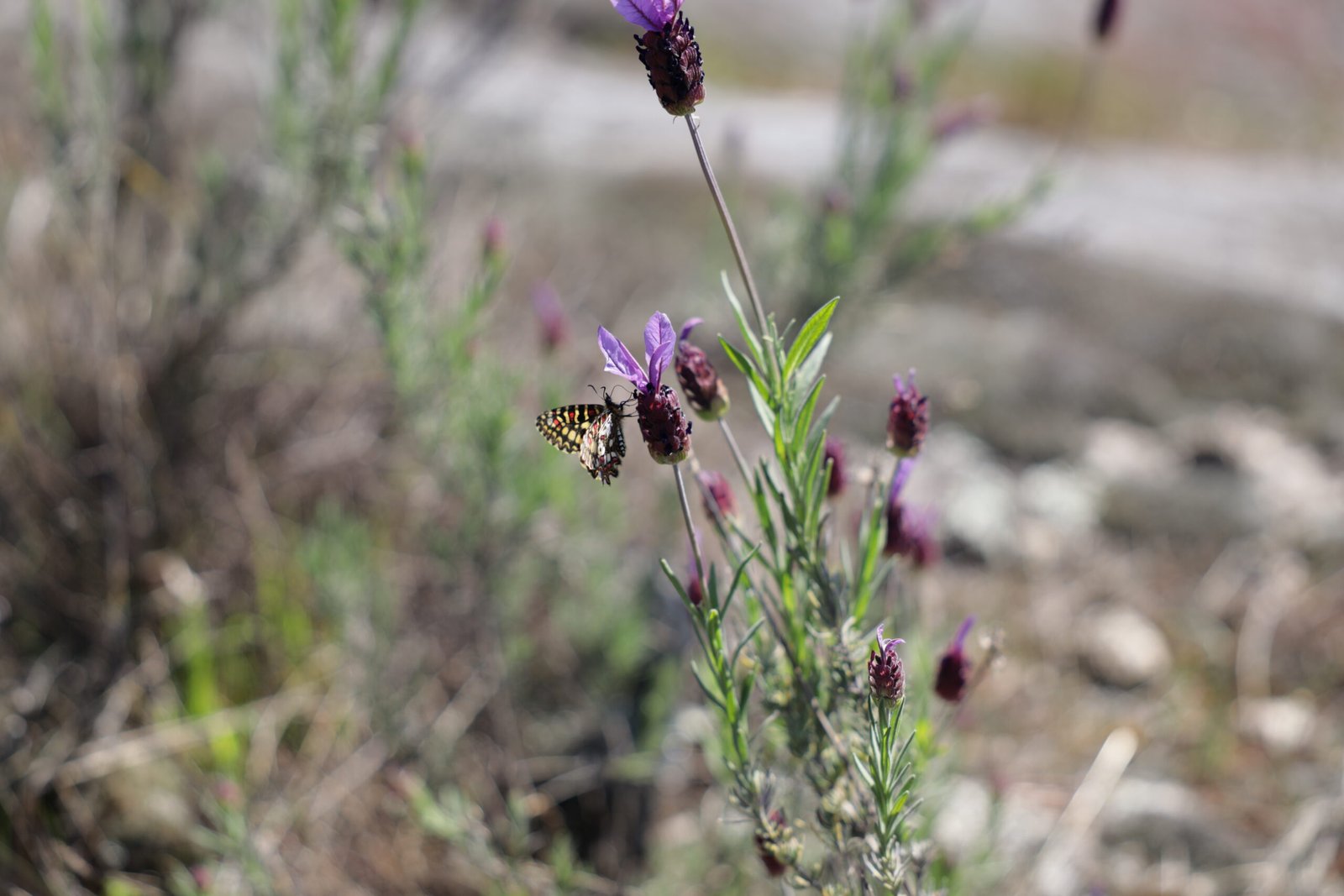
Avian and Pollinator Resurgence:
Soil Microfauna and Insect Life:
Wildlife Corridors and Macrofauna
UL is a homecoming. We have borrowed the word ul from Yucatec Maya language, it means to arrive at one’s own home/origin (returning home). UL is not just a destination, it is the specific act of returning to the exact place where you belong, where you are rooted, and where your story began.
Modern life has separated us from the soil, turning our relationship with food into something transactional, detached and harmful to our bodies and to the planet. We have spent too long living outside the natural world, forgetting that our bodies speak the same language as the living earth, and that humans are not separate from the ecosystem—we are part of it.
UL is the closing of that divide. Our rewilded olive oil is a sensory awakening and an invitation to step back into the ecosystem where we belong. It is not just a return to the land, it’s a return to your body, to your biology, to your true nature.
Born from olive trees allowed to reclaim their wild, UL restores our primal bond with what we eat. UL is not an imported luxury—it is a reclamation of your place in the natural world.
In arriving home to its true, raw flavor, you are ultimately arriving back to yourself.
Yucatec Maya: To arrive at one’s own home/origin (returning home).